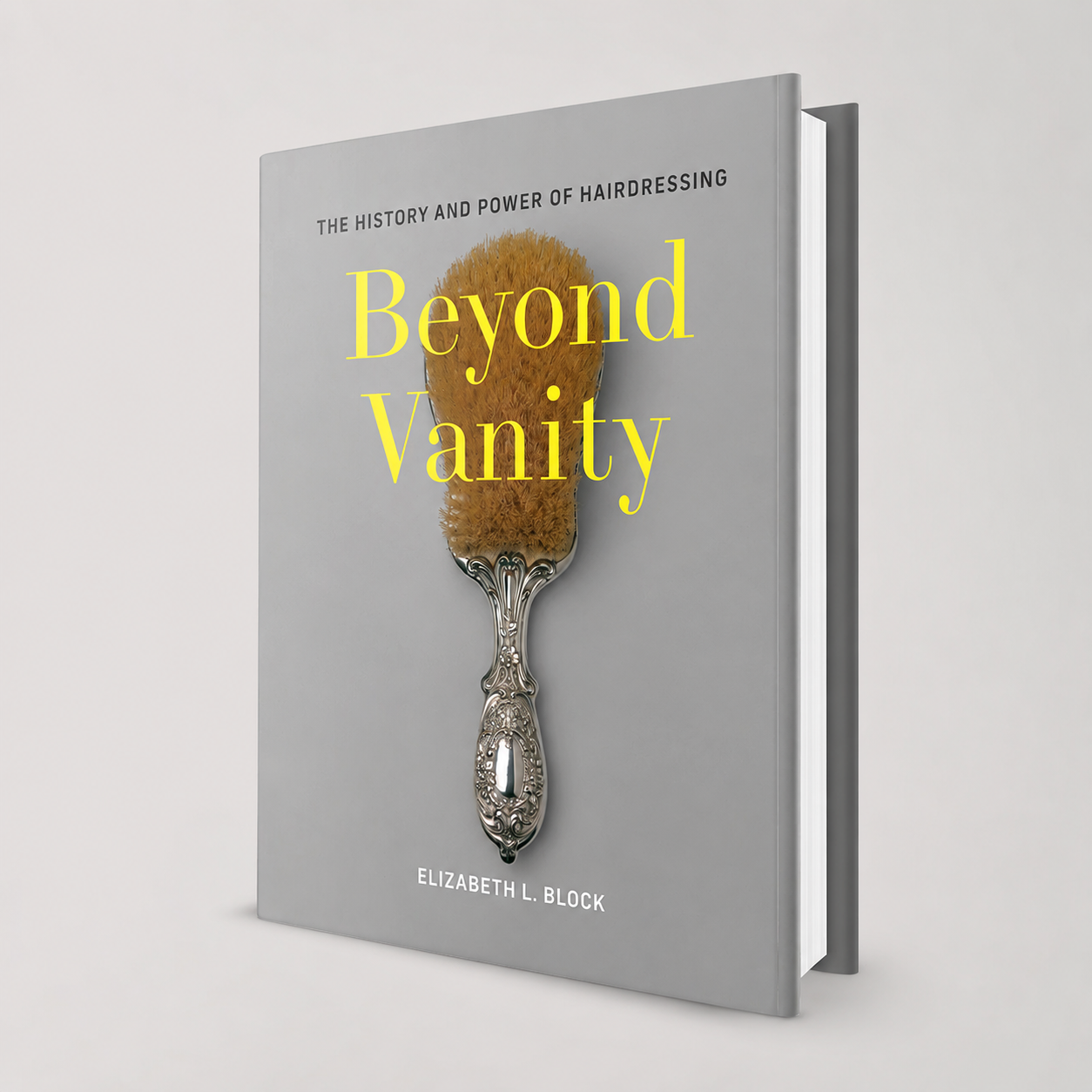
The History & Power of Hairdressing
Winner: 2025 Costume Society of America’s Millia Davenport Publication Award
Beyond Vanity
In the nineteenth century, the complex cultural meaning of hair was not only significant but could also affect one’s place in society.
After the Civil War, hairdressing was also a growing profession and the hair industry a mainstay of local, national, and international commerce. In Beyond Vanity, Elizabeth Block expands the nascent field of hair studies by restoring women’s hair as a cultural site of meaning in the early United States. With a special focus on the places and spaces where the hair industry operated, Block argues that the importance of hair has been overlooked due to its ephemerality and its misguided association with frivolity and triviality. As Block clarifies, hairdressing was anything but frivolous.
Book Details
Author: Elizabeth L. Block
Publisher: The MIT Press
Publication date: September 10, 2024
Hardcover ISBN: 9780262049054
Ebook ISBN: 9780262379465
Winner of the 2025 Costume Society of America Millia Davenport Publication Award
What Beyond Vanity Reveals
Beyond Vanity examines women’s hair as a site of identity, respectability, work, commerce, and cultural power in nineteenth-century America. It traces hairdressing as a profession and industry while considering how gender, race, racism, class, beauty standards, entrepreneurship, and public life shaped women’s experiences.
Talks and Interviews About Hair and Beauty History
Explore Elizabeth’s lectures and interviews on women’s hair, beauty standards, race, class, labor, entrepreneurship, and the cultural meaning of hairdressing.
About Elizabeth L. Block
Elizabeth L. Block, PhD is an award-winning art and culture historian, author, and international speaker specializing in nineteenth-century fashion, hair, beauty, and women’s cultural history.
Frequently
Asked
Questions
-
Anything women spend time on deserves serious study. Hair can express individuality and political meaning while sustaining an industry that launched generations of women entrepreneurs. Elizabeth argues that hair should be central to women’s history—as fundamental to scholarship as politics and education. She sees hair studies as a field distinct from fashion studies and calls for foundation support for the research and publications needed to develop it.
-
The book focuses on nineteenth-century America, particularly the decades after the Civil War, when hairdressing was becoming a growing profession and the hair industry was expanding through local, national, and international commerce.
-
Elizabeth studies both the private places where hair was prepared—including bedrooms, salons, and enslaved people’s quarters—and public spaces where it was presented, such as parties, fairs, stages, and workplaces. Looking closely at these settings reveals how hair shaped women’s lived experiences and their place in society.